
Supporting health-led responses to alcohol and other drugs.

Elevating the voices of consumers to create positive change

From judgment to compassion.

We all want the people we love to stay healthy and well.

Alcohol and other drug (AOD) use can affect people, families and communities in many different ways. Yet too often, public conversations about alcohol and other drugs are shaped by stigma, shame and judgement. This can make it harder for people to speak openly about their experiences or seek support when they need it.

At Uniting, we believe every person deserves dignity, care and the opportunity to access support. Through our advocacy, we work to build greater understanding of AOD and promote responses that help people stay healthy, connected and well.

We call for:

Why is this important?

People who use alcohol and other drugs come from all walks of life. They are our family members, friends, colleagues and neighbours.

Research and experience tell us that stigma can be a significant barrier to seeking help. When people fear judgement or discrimination, they are less likely to reach out for support, which can increase risks for individuals, families and communities.

Health-led responses focus on what helps people stay connected to care and support. They prioritise treatment, counselling, peer support, harm reduction and early intervention, helping people access assistance when they need it most.

By creating more open and honest conversations about alcohol and other drugs, we can reduce stigma, improve wellbeing and build stronger, healthier communities where people feel safe to seek help.

Advocacy research & news

Ophelia felt like she was being victim-blamed. “I was made to feel like because I’d taken this drug, like what did I …
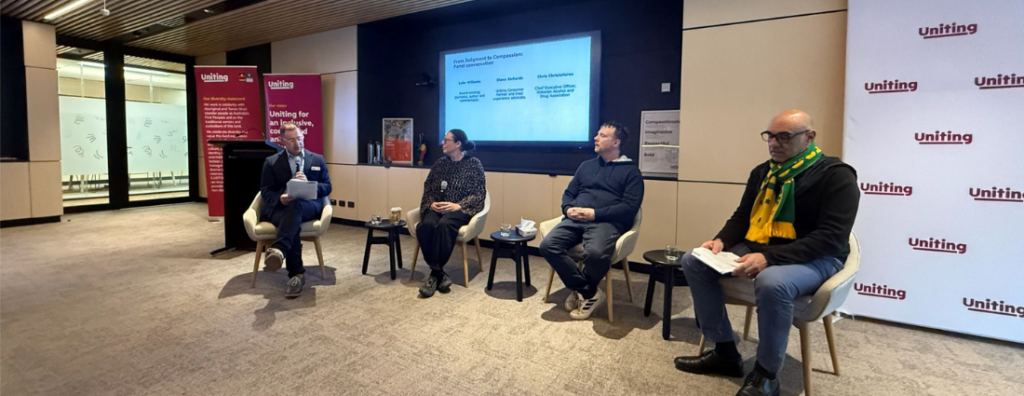
Uniting hosted a sector conversation,  From judgment to compassion: Uniting for a supportive response to illicit drug use and possession.

Iliana never imagined it would turn into an addiction, with cycles of drug use linked to traumatic life-events and depressive episodes throughout her …

Uniting Vic.Tas and UnitingCare Australia welcomed the opportunity to make this joint submission to the Inquiry into the Health Impacts of Alcohol …

We, at Uniting Vic.Tas, the community services organisation of the Uniting Church of Victoria and Tasmania, are extremely disappointed by Victorian Government’s …
Uniting Vic.Tas welcomes the State Government’s commitment to make the North Richmond Medically Supervised Injecting Room (MSIR) a permanent fixture of Victoria’s …
Uniting Vic.Tas, one of Victoria’s largest alcohol and drug treatment providers, supports the intent of the Bill to be tabled by Reason …

Frequently Asked Questions (FAQs)

Harm reduction refers to practical measures that reduce the health, social and economic harms associated with alcohol and other drug use. Examples include needle and syringe programs, medically supervised injecting services and drug checking services. These approaches help keep people safer and provide opportunities to connect people with treatment, healthcare and other support.

A health-led response recognises that alcohol and other drug issues are best addressed through healthcare, support and early intervention. It focuses on helping people access treatment, counselling, peer support and other services that improve wellbeing and reduce harm.

Uniting works alongside people, families and communities affected by alcohol and other drugs every day. Our advocacy is informed by this experience and by what we see helping people build healthier, more connected lives.

The way we talk about alcohol and other drugs shapes community attitudes and influences whether people feel safe seeking support. More open, informed conversations can challenge stereotypes, reduce stigma and help create pathways to care.

Alcohol and other drug issues can have far-reaching impacts. Health-led responses help reduce preventable harms, strengthen support networks and improve outcomes for individuals, families and communities.

While we discourage illicit drug use, it is the fact that people use illicit drugs.

It is also the case that any use of any drug, legal or illegal, carries some risk.

A health‑led response recognises those risks and focuses on honest information, supports access to treatment and harm‑reduction, rather than pretending we can eliminate all drug use through punishment.

In Australia, needle and syringe programs have significantly reduced rates of HIV and hepatitis C, and medically supervised injecting centres have reduced overdose deaths. Decriminalisation in countries like Portugal has led to lower rates of drug use, death, and incarceration.

Right now, the focus is on building support for a health‑led response to drug use and possession that treats people with dignity and helps them stay healthy and well.

There are different policy options to get there; the clear message is that criminal punishment for personal use has not worked to reduce harm, and health‑led responses do.

Across multiple international and Australian reviews, harsher criminal penalties have not been associated with lower drug use or overdose, while non‑criminal, health‑focused responses (like diversion, treatment, and harm reduction) have reduced reoffending, improved health outcomes and cut social and justice system costs

In 2023, the Uniting Church Synod of Victoria and Tasmania adopted a resolution to support and advocate for the decriminalisation of possession and personal use of small amounts of illicit drugs, as part of a broader focus on a health-led response to illicit drug use.  

Uniting supports the resolution of the Synod.  

Everyone is impacted in some way, but groups that are being disproportionately impacted include First Nations communities, young people, people living with mental illness, and those experiencing poverty or homelessness.