Advocating for housing security.

Elevating the voices of consumers to affect social change

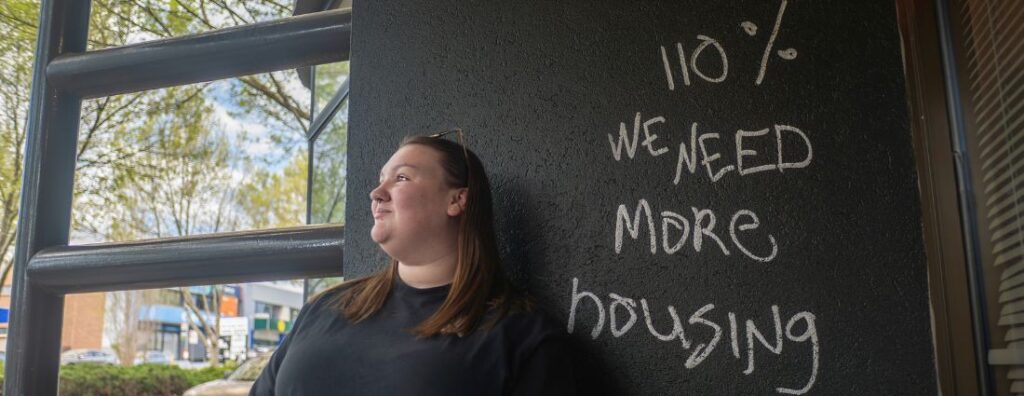
Everyone should have access to a safe, suitable and affordable home.

Australia is amid a housing crisis. Median home prices and private rents are rapidly increasing. There appears to be a mismatch between the housing supplied and the homes people want. The cost of construction is increasing, while productivity in construction is decreasing.

There is effectively no private rental housing available for people on income support, meaning more and more people are registering to access social housing.

As a result, securing a safe, affordable place to live is becoming more difficult.

Why’s this important?

Having a safe, secure place to call home is a basic human right. Housing is foundational to a person’s wellbeing, safety and stability, yet more and more Australians are at risk of losing that foundation.

An Impact Economics report found that the number of Victorians and Tasmanians at risk of homelessness has markedly increased since 2016 – rising by 67% in Victoria, and by 25% in Tasmania.

People are often pushed into homelessness by poverty, domestic violence, and a chronic shortage of affordable housing. And once someone is experiencing homelessness, they’re faced with barriers to healthcare, employment and education that can impact on their wellbeing and make it difficult to access stable housing again.

Our housing system needs to provide safe, secure and affordable homes for everyone. Homelessness and housing insecurity are fixable, provided we have policies that treat housing as a human right, not as a privilege.

Advocacy research & news

During Anti-Poverty Week, Uniting is urging the Federal Government to raise income support payments and increase affordable housing to better support Australians …
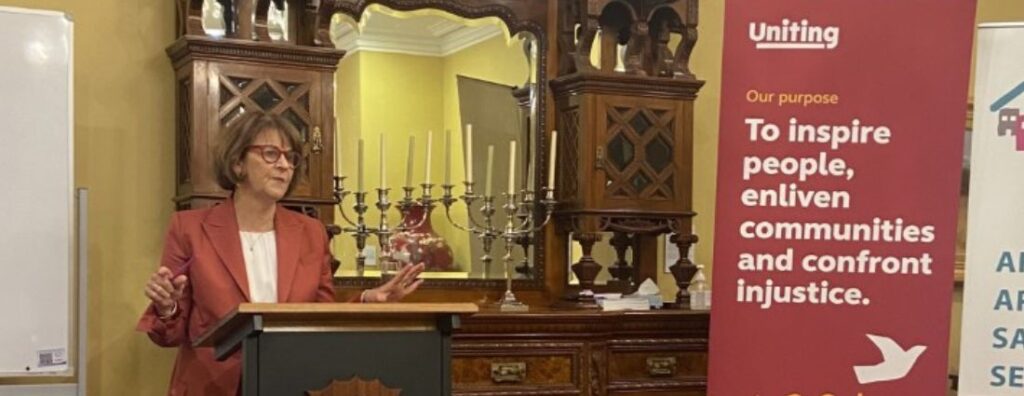
In early November, Bronwyn Pike launched the ‘Poverty and Homelessness’ edition of Parity magazine at the Hobart Town Hall. Parity is a national magazine published monthly …
Community organisations join forces calling for immediate increase to income support payments to tackle youth homelessness.
Uniting Vic.Tas has welcomed the Federal Government’s decision to provide $67.5 million to address a looming funding shortfall for homelessness services.
Uniting Vic.Tas is urging the Federal Government to maintain critical funding for homelessness services already struggling to keep up with record demand …
Uniting Vic.Tas CEO, Bronwyn Pike today called on the major political parties in the upcoming Victorian Election to commit to an intergenerational …
This week, Uniting Vic.Tas provided a submission to the consultation for the TasmanianHousing Strategy. In putting this submission together, we had the …

Campaigns and partners

Healthy Homes for Renters
Everybody's Home

Frequently Asked Questions (FAQs)

Housing is more than just a roof over your head – it needs to be somewhere that’s safe, stable, affordable and meets an individual’s or family’s needs, and having security of tenure for as long as they need that specific home.

Homelessness can take many different forms. Although rough sleeping is one of the more visible forms of homelessness, this represents only a small proportion of people without a home. In fact, rough sleeping makes up less than 7% of all Australians experiencing homelessness.

More commonly, homelessness is someone sleeping in their car, staying in overcrowded or unsafe housing, relying on short-term crisis accommodation, or moving between friends’ or family members’ homes. This is often referred to as hidden homelessness, and it typically goes unnoticed or is misunderstood.

In 2022, 3 million people were at risk of homelessness, where one setback like job loss or illness could mean losing their home.[1]

Anyone can experience homelessness or housing insecurity. It can affect people of all ages and backgrounds – whether families or single people, the very young or elderly, people with a disability, or people from culturally diverse backgrounds.

In 2023/24, 280,000 people were assisted by specialist homelessness services across Australia, including Uniting:

  • 6 in 10 were female
  • 1 in 3 (34% or 92,300) clients were living as a single parent with one or more children
  • Above 15,600 were women aged 55 years and over, and 13,900 were men aged 55 years and over
  • 33% of all clients had experienced family violence
  • the proportion of employed people seeking homelessness support increased from 10.9% to 15.3% over the past five years
  • 15% of all homelessness clients are unaccompanied children and young people
  • First Peoples make up 3.8% of the population by 28% of homelessness service clients.

[1] Homelessness Australia Facts 2025

The drivers of homelessness are numerous and complex, but is largely caused by policies and systems that do not adequately support people through difficult times. The main drivers of homelessness include:

  • A lack of affordable housing options and a private rental market that is increasingly out of reach for many.
  • Long wait times for and chronic underinvestment in social housing.
  • Increased cost of living and financial stress.
  • Inadequate income support payments to meet rising costs.

There’s no single solution to homelessness, just as there’s no single cause. Some of the key actions that would make a meaningful difference include:

  • Improved planning regulations to create a greater diversity of housing stock to meet the diverse needs of people and families. These includes more in-fill development and more homes of different sizes.
  • Increased financial support for Community Housing Providers to develop and re-develop community housing to increase supply and ensure it is fit-for-purpose.
  • Increasing income support payments to be above the poverty line.
  • Strengthening rental protections to make housing safer, fairer and more secure for renters.
  • Investing in wraparound supports that help people maintain their housing.
  • Adopting Housing First approaches that prioritise stable housing and addressing other needs.