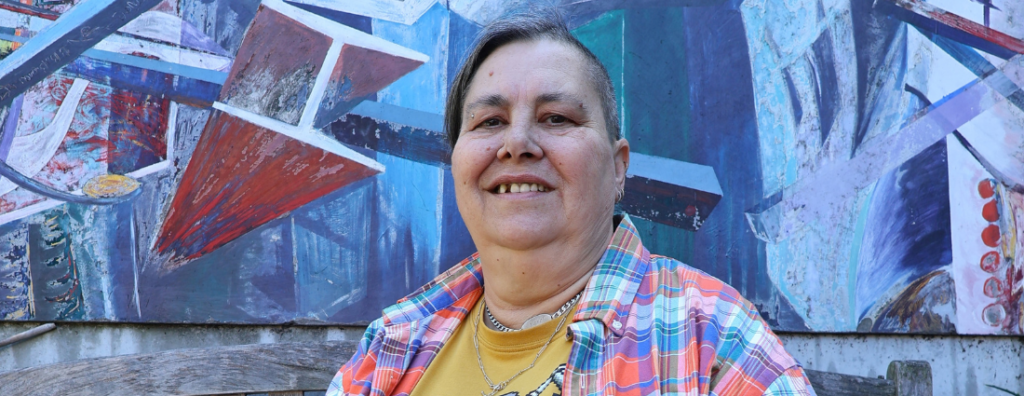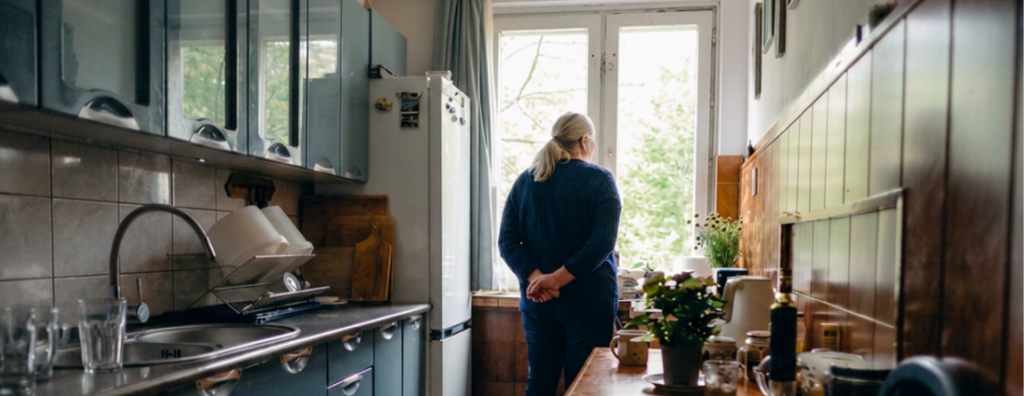
At 64, and with a 40-year career as a social worker in community health, local government and tertiary education, Sue suddenly found herself in the same position as some of her clients – homeless and without an income.
She also didn’t realise she’d been experiencing family violence after years of emotional and financial abuse, which resulted in the loss of her home.
Like many women her age, Sue thought one had to be physically or verbally abused to meet the definition of family violence. But when she unpacked her complicated relationship with her former same-sex partners, she was dumbfounded when her Uniting support worker explained that she’d experienced a decade of abuse.
“I should know …I used to work in that area,” she says.
Sue was referred to Uniting’s Marrageil Baggarrook program, a housing support service for women who have experienced family violence, which was able to step in and support her to find permanent housing.
“Uniting, and the program, was such a blessing for me at that time,” she says.
Throughout her 12-year relationship, Sue’s partner was suffering from depression and had been secretly accruing gambling debts and unpaid fines.
“I rather naively and trustingly had things like Citylink, water bills and other things in my name. I thought she was still paying and she stopped,” Sue says.
She adds that she didn’t notice the piling debts because her partner would “intercept mail and hide stuff and not deal with it”. Once she realised, however, the damage had already been done, and she was forced to sell her house to pay crippling debts.
Sue didn’t just lose a home; she lost 12 years’ worth of savings and found herself in a place of arduous financial insecurity. Her attempt to return to the rental market proved too costly and challenging to manage.
“It never ceases to amaze me, as I’ve met other women in similar circumstances, how quickly things can deteriorate, and then one of the biggest populations of people experiencing homelessness is women over 50.
“It doesn’t take much to go from having a very secure and active lifestyle to potentially having nothing.”
Sue had already begun the process of building back some of the security she’d lost to her ex-partner’s debts, when in 2023, she had a terrifying near-death experience and was admitted to hospital with a major infection and put onto dialysis. The physical toll on her body and the need to be connected to dialysis three times a week forced Sue to leave a job that she loved and into what she called “involuntary retirement” at the age of 62.
She spent the next two years sleeping on friends and families’ couches, all while dealing with significant health issues and a physical disability.
“I had a very strong family and social network that would not let me fall, so I never had to sleep in my car, although I came very close,” she says.
After realising there were no dialysis chairs available within driving distance from her temporary accommodation in regional Victoria, Sue made the difficult decision to move to Melbourne to be closer to metropolitan hospitals, moving away from the family support networks that were keeping her afloat.
In Melbourne, Sue reached out to Uniting’s team at Marrageil Baggarrook, who were able to secure her temporary housing while they looked for permanent housing that fit her specific requirements – ground floor, no stairs and close to a hospital for her tri-weekly dialysis appointments.
She also needed to find a home that would allow her to keep her “groodle-doodle” Audrey, who had been a constant companion throughout the uncertainty. “I wouldn’t have survived without that companionship,” Sue says.
She recalls filling in her housing application while sitting in a hospital chair. “I’m hooked up to the dialysis machine and only have one arm to do it … I’m talking to the housing department and sending pictures of my driver’s license and stuff one-handed.”
Not long after, Sue was offered her permanent home. “We stepped into what is the combined laundry bathroom and I took one look at the shower with an established set of rails and a shower chair and thought, ‘heaven’.”
With the support of Uniting, “paying for moving costs and handing me a washing machine and a microwave as I walked through the door,” Sue moved into the unit a week later.
“I couldn’t be more grateful for the support they provided.”
Now settled into her forever home with Audrey, Sue says she’s determined to stay put. “They’re going to have to carry me out of here in a box,” she laughs.
Despite her experiences with illness, family violence and homelessness, Sue’s resilience and positive outlook on life is infectious.
“I don’t want to change my generosity of spirit just because I’ve had bad experiences,” she said. “These things happen, so better if you resolve them than hanging on to the angst, because all that does is damage to you.”
Once her health gets back on track, Sue hopes to do some voluntary work.
“You can take the social worker out of community health, but you can’t take community health out of the social worker,” she said. “I’ve got a pension, I’m happy, I’m settled. I’d just like to give back in whatever way I can.”
Learn more about Uniting’s homelessness support services.