Content warning: This article mentions themes of family violence. If this article raises concerns for you, please contact Lifeline 13 11 14 or 1800 RESPECT 1800 737 732.
Maya was 35 years old when she bought her first mobile phone. For 19 years, she had been forbidden to own one.
Maya was married and had her first child when she was just 16. As her marriage progressed and she had more children, her husband exercised complete control over her life, taking away her free will.
“I had no say in anything. He just controlled my life,” Maya says. “What I wore, where I went, what I spent my money on … didn’t let me see my family … didn’t let me work.”
Throughout the marriage, Maya experienced family violence in various forms, including physical, sexual, verbal, emotional and financial abuse.
For 19 years, Maya stayed at home, caring for her children. “It was a lonely and miserable marriage.”
Without a mobile phone, she had to secretly contact her family and friends using her home landline phone and would disguise meet-ups with them as “trips to the supermarket” so that her husband wouldn’t know. “Because that was the only thing I was allowed to do,” she says.
Maya describes a moment of feeling “rock bottom” as being the catalyst for her decision to leave her husband. “I was at my lowest.”
“I’m glad I did [feel rock bottom] … if I didn’t feel that way, I wouldn’t have had the strength to leave him,” she reflects.
Hailing from an Australian-born Lebanese heritage where divorce is culturally frowned upon, Maya felt like leaving her marriage wasn’t an option, and so remained in the relationship for many years.
After her divorce, some members of her Lebanese community tried to convince her to go back to her husband, while her family supported her decision whole-heartedly. “I didn’t care,” Maya says of her culture’s condemnation of divorce. “I had enough.”
Beyond the cultural expectations, she says her love for her children made her decision to leave almost impossible.
“It’s not easy, especially when you have kids,” Maya says. “You always worry about the kids more than yourself. It’s going to change their lives.”
While she expected to feel immediate relief upon separation, she was surprised to experience a long period of adjustment. Maya wants other Lebanese women who may be considering leaving an abusive relationship to know that while there will be many struggles and hurdles to overcome, “It’s worth it in the end.”
A week after leaving her husband, Maya’s sister took her to buy her first mobile phone – a process she described as equally scary and freeing.
At 39, she entered the workforce for the first time after nearly 20 years of coercive control – a milestone she describes as life-changing and challenging.
“I had no idea of anything, all the admin stuff, and just the work environment … how to deal with clients. That was so foreign to me … Because I was a stay-at-home mum for 19 years.”
Maya says employment does more than provide financial security – it gives her the sense of freedom and independence she has always craved, while showing her children how a single Lebanese mother can provide for her family and be a good role model.
Despite being divorced for almost a decade, Maya still reminds herself that she is free, and that she has freewill. “I still have to remind myself sometimes that I can do this, or I can buy this, or I can go there … I have to remind myself I have freewill because I didn’t for a long time.”
Now in her 40’s, Maya can’t believe how much she’s changed and what she used to suffer through. “My light was out for a long time”.
“I can’t believe someone thought he had the right to do that to me,” Maya says. “My self-worth was non-existent.”
Maya says that employment has opened doors to something she never thought possible. “It’s not just financial freedom. It’s getting to meet amazing, inspiring people to work with … and it’s given me a confidence I never had before.”
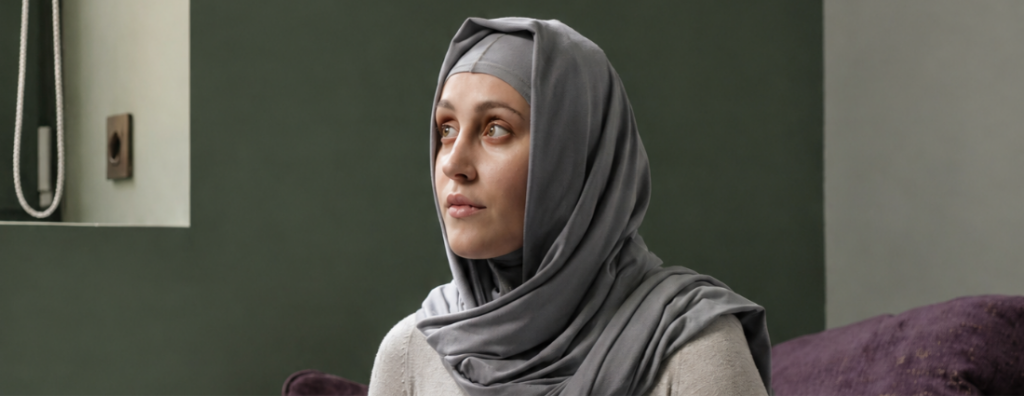
* The name in this story has been changed to respect the person’s privacy. Photo for illustrative purposes only. It is not a photo of the person featured in this story.