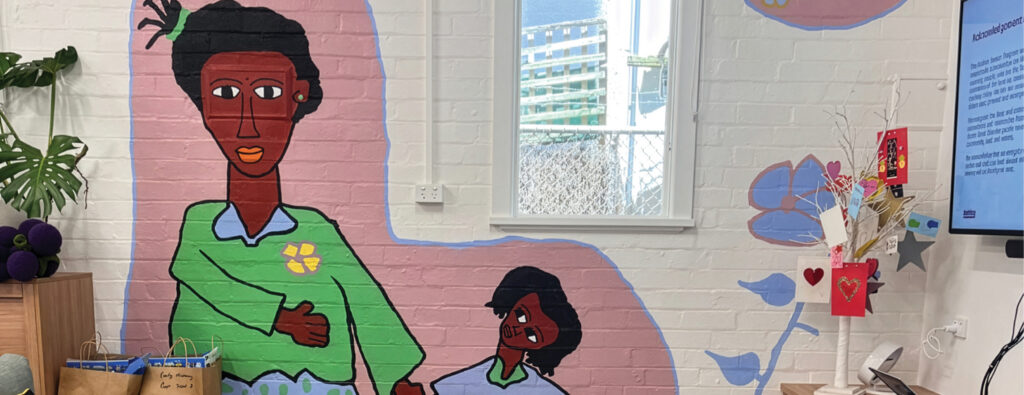
Janet has been hearing voices since she was a little girl. Protecting and guiding her through a tough childhood of family violence, these voices brought her much needed comfort and care.
In her 20s, Janet says her relationship with her voices changed, and at age 29 she was diagnosed with chronic schizophrenia after being hospitalised during a manic episode.
At the time, she was labeled as “non-compliant” and “treatment resistant” as she refused to denounce her voices, seeing them as part of her identity.
To her, these voices were real, they were just “unpinchable” – they could not be felt between the thumb and forefinger.
Janet’s experience is not uncommon. According to mental health research, 1 in 10 people experience auditory hallucinations, where they hear voices or have sensory experiences that people around them don’t.
In early years, voice hearing was treated primarily with medication. This approach typically ignored the lived experience of voice hearers, not understanding the significant role voices played in their lives.
Janet’s doctors refused to acknowledge that her voices were real to her, and she spent years as a “revolving door patient”, in and out of mental health institutions and hospitals.
It wasn’t until Janet discovered Uniting’s Voices Vic program, a support service recognising her voices as real and important to her, that she finally felt accepted and understood.
“If it wasn’t for Voices Vic … I’d be out in the wilderness … lost,” she says. “It’s really shifted and changed my life.”
“Firstly, [Voices Vic] acknowledge voices. They acknowledge trauma. And we look at coping strategies, distraction techniques, and ways of working with voices.”
With the aim of sharing positivity about the experience of hearing voices, Voices Vic offers recovery and mentoring groups to help participants develop improved wellbeing and skills to change their relationship with their voices.
Hearing voices is not always tied to mental health issues. There are many reasons why people hear voices, such as stress, traumatic events, extreme hunger, and sleep deprivation.
“Voices are significant others in a person’s life,” shares Janet. “For some people, voices will be in your life forever. And I’m one of those people. The voices will be in my life forever.”
Today, Janet is a Senior Mentor at Voices Vic, and an award-winning advocate for change.
In August this year, she was named the joint winner of the Lived Experience Changemaker award at the Mental Health Services conference.
“What the award means [to me], it’s recognition of the program. Voices Vic is being recognised. My adventures through life have been recognised. My voices are being recognised,” she shares.
If you’re a voice hearer or would simply like to understand what supports are available, you can visit Voices Vic.